
The Nature of Identity
Alice's Adventures in WonderlandAlice's repeated questioning of who she is, combined with her physical transformations, explores the theme of identity as fluid and unstable.
increasing Bearing strength in each event
 decreasing
Bearing strength in each eventdecreasingThe First Identity Crisis
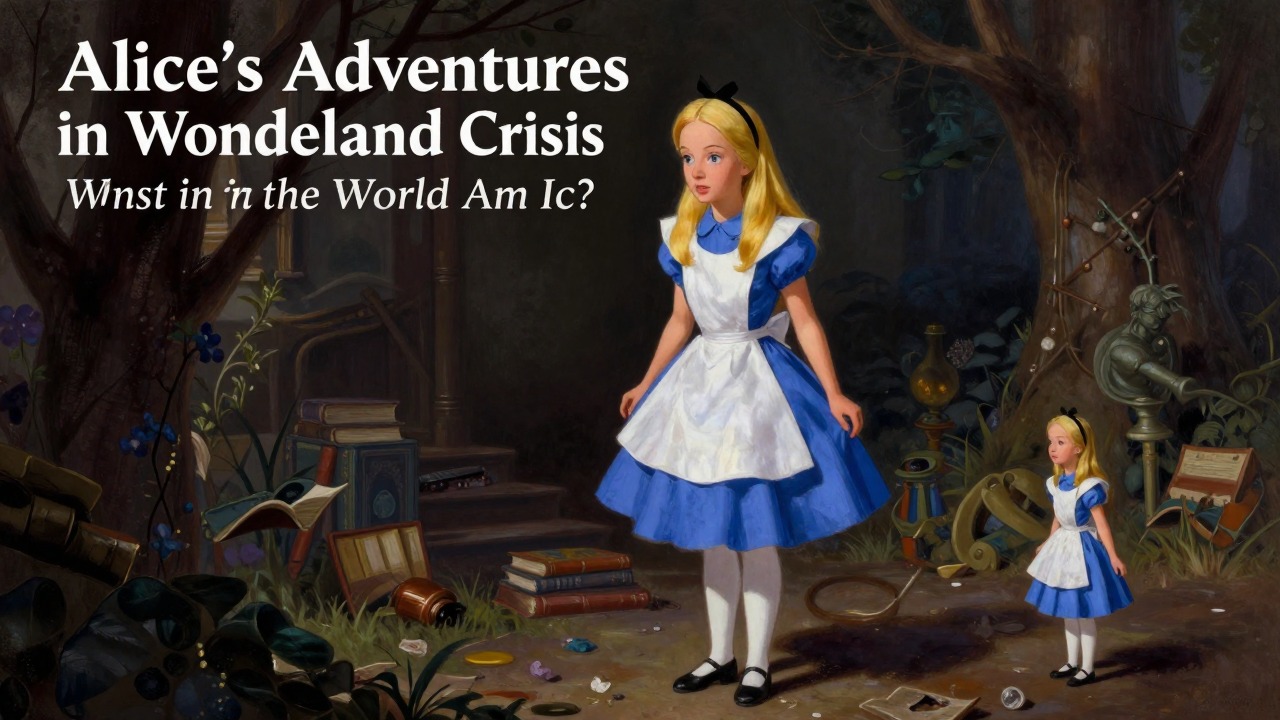
Who in the World Am I?
The Great Puzzle
Alice's first major reflection on identity occurs after she has grown and shrunk. She wonders if she has been changed in the night, and she tries to recall her lessons to see if she is still the same person. The failure of her memory suggests that her identity is not fixed.
The Mabel Dilemma
Alice imagines that she might be Mabel, a girl who knows very little. She decides that if she is Mabel, she will stay down in Wonderland. This decision is a rejection of the identity imposed by the world above. Alice is beginning to see that identity is a choice, not a given.
The Caterpillar's Challenge
A Direct Question
The Caterpillar's Interrogation
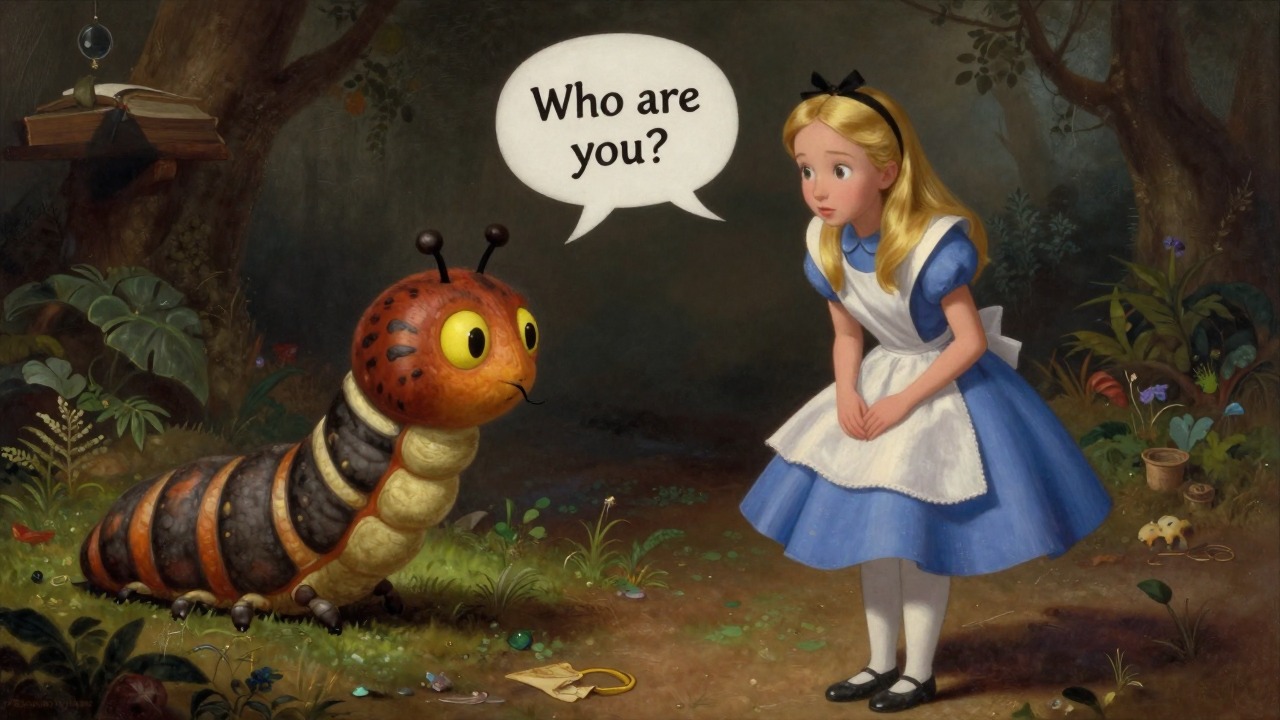
The Caterpillar's repeated question "Who are you?" forces Alice to confront the impossibility of answering. She cannot define herself because she is constantly changing. The Caterpillar's refusal to accept her confusion highlights the inadequacy of language to capture identity.
The Recitation Test
The recitation of "You are old, Father William" is a test of identity. Alice's altered version suggests that her internal knowledge has changed, reflecting her external transformation. The Caterpillar's declaration that it is "wrong from beginning to end" is a judgement on her identity. The scene suggests that identity is performative; it is constituted by what we say and do.
The Pigeon's Perspective
A New Definition
The Pigeon's Accusation
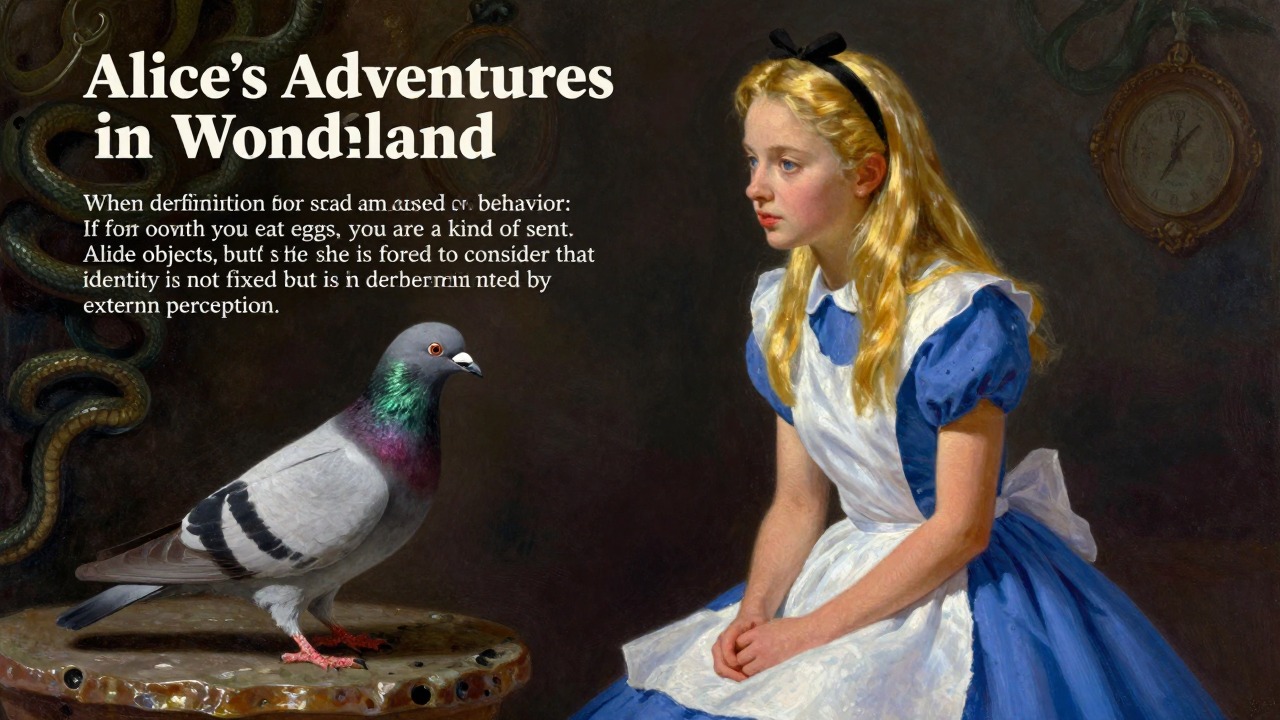
When the Pigeon mistakes Alice for a serpent, it offers a definition of identity based on behavior: if you eat eggs, you are a kind of serpent. Alice objects, but she is forced to consider that identity is not fixed but is determined by external perception.
The Relativity of Identity
Alice's silence after the Pigeon's accusation indicates that she is processing this idea. The Pigeon's logic is absurd, but it mirrors the way identity is constructed in the dream world. Alice's identity is not a stable essence; it is a function of the situation she is in. This idea is a key theme of the book.
The Dream's End
The Resolution of Identity
Alice's Growth and Defiance
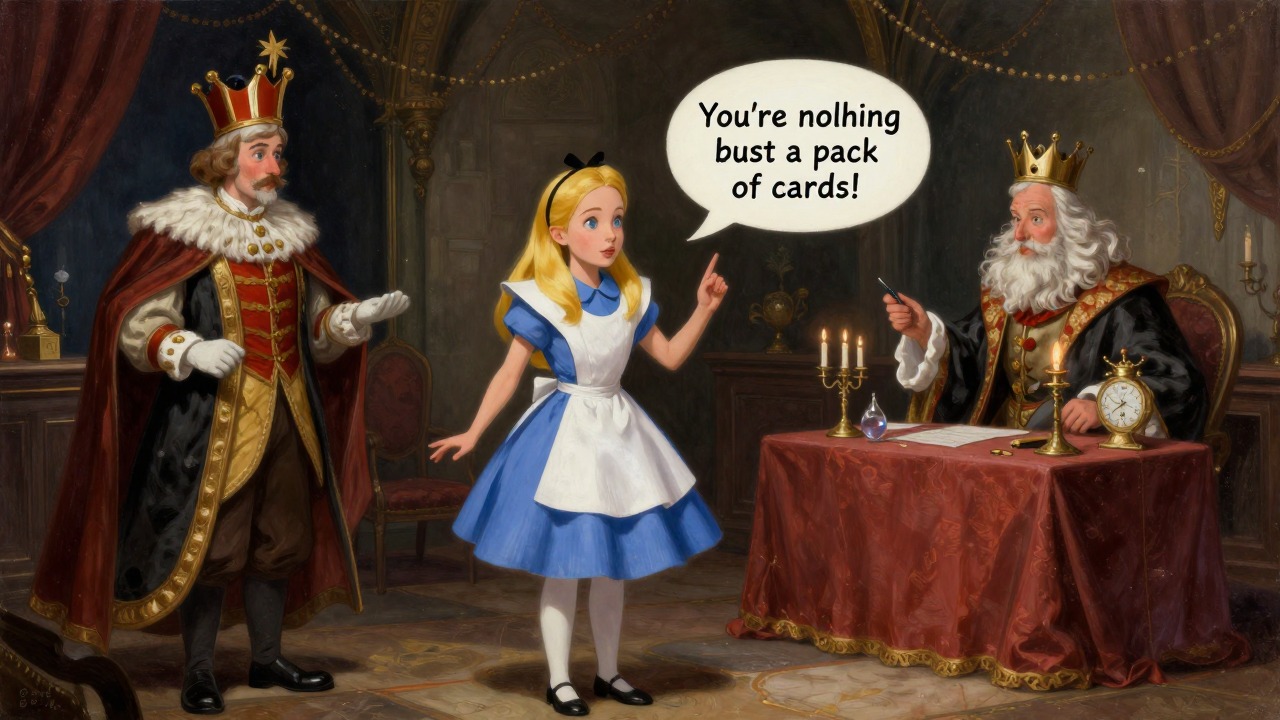
Alice's physical growth in the court parallels her growing confidence. She asserts her own identity by challenging the King and Queen. When she declares, "You're nothing but a pack of cards!" she is defining herself in opposition to the dream world.
The Awakening
Alice wakes up on the riverbank, still herself but changed by the experience. Her sister's dream of her future suggests that Alice's identity will continue to evolve. The dream has been a process of self-discovery, and the ending implies that identity is a narrative, not a fixed point. Alice's adventures have shaped her, and she will carry the memory of Wonderland with her.
after the first size change, in the hall
at the mushroom, with the Caterpillar
after the mushroom, in the wood
at the trial, near the end
